
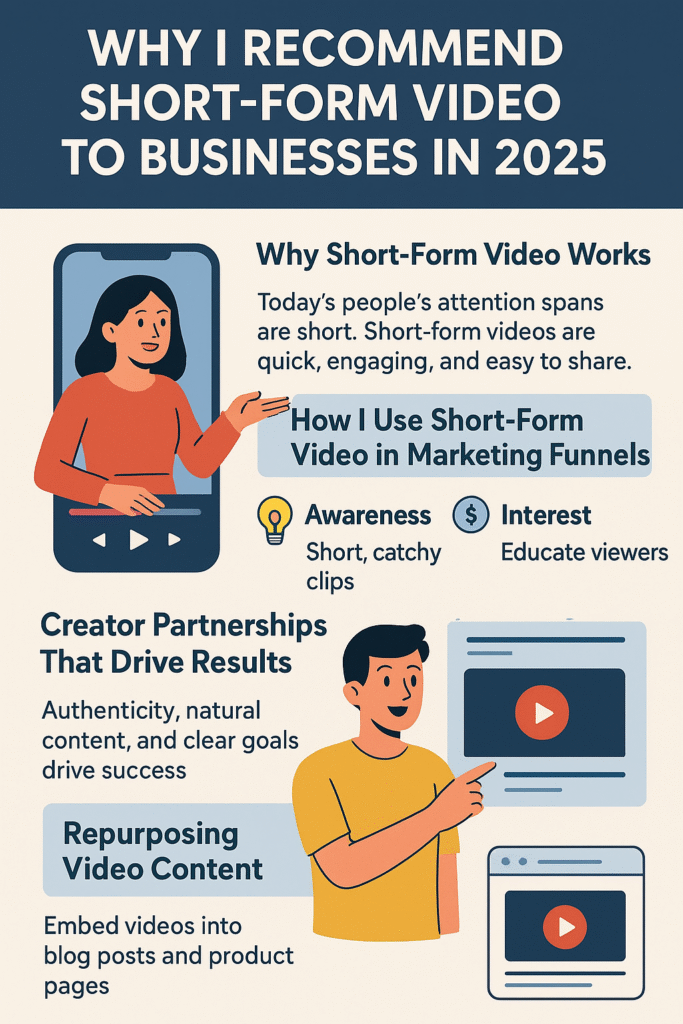
Why Short-Form Video Marketing is Essential for Businesses in 2025
Introduction
Over the past two years, one trend in digital marketing has become crystal clear: short-form video is taking over. Platforms like TikTok, Instagram Reels, and YouTube Shorts are changing the way businesses communicate with their audience. These bite-sized videos grab attention faster than any other format, making them a must-have tool for modern marketers.
As a digital marketer, I recommend businesses invest in short-form video—not because it’s “trendy,” but because I’ve seen real results. From increasing engagement to building trust and driving conversions, short-form video is transforming the way brands connect with people online.
In this blog, I’ll explain why short-form video works, how to use it in marketing funnels, why creator partnerships matter, ways to repurpose videos, and how to measure success.
Why Short-Form Video Works
People today have very short attention spans. Most audiences decide within the first few seconds whether to watch or scroll past your content. Short-form videos match this behaviour perfectly they’re quick, easy to watch, and highly shareable.
Key reasons short-form video works:
-
Captures attention quickly: 15–60 second videos are enough to convey a message and grab interest.
-
Easy to share: Short videos are more likely to be shared on social media than longer content.
-
Memorable: Bite-sized content is easier to remember.
-
Versatile: Works across different platforms like TikTok, Instagram, YouTube Shorts, and even LinkedIn.
-
Builds trust: Authentic, relatable videos make audiences feel connected to the brand.
Example:
I worked on a campaign where a 30-second product explainer video generated more leads than a long blog post or a static ad. This shows how video can often outperform other forms of content when used effectively.
How to Use Short-Form Video in Marketing Funnels
Short-form videos can be used strategically at every stage of the marketing funnel. Structuring content this way ensures each video has a clear goal.
1. Awareness (Top of Funnel)
At this stage, the goal is to catch attention and introduce your brand or product.
Tips for awareness videos:
-
Keep them short (15–30 seconds).
-
Make the content fun, engaging, or relatable.
-
Avoid heavy selling; focus on introducing your brand.
-
Use trending music, captions, or challenges to increase reach.
Example:
A catchy 20-second video introducing a new product can get thousands of views in a week, helping people recognize your brand quickly.
2. Interest (Middle of Funnel)
Once audiences are aware of your brand, you need to educate and build trust.
Tips for interest videos:
-
Make them slightly longer (30–60 seconds).
-
Show how a product or service works.
-
Provide useful tips or insights related to your industry.
-
Highlight value and benefits without a hard sell.
Example:
A 45-second tutorial video showing how your product solves a common problem can encourage viewers to learn more or follow your page.
3. Conversion (Bottom of Funnel)
At the conversion stage, videos should encourage action, like making a purchase, signing up, or downloading a resource.
Tips for conversion videos:
-
Length: 60–90 seconds.
-
Use strong calls-to-action (CTAs).
-
Include testimonials, product demos, or limited-time offers.
-
Guide viewers to a landing page or sign-up form.
Example:
A testimonial video from a satisfied customer can convince someone to make a purchase, especially when paired with a discount or offer.
Creator Partnerships That Drive Results
Partnering with content creators is a highly effective way to boost short-form video performance. You don’t always need celebrities; micro-influencers often deliver better results.
Benefits of creator partnerships:
-
Authenticity: Creators bring a natural, relatable style to content.
-
Targeted reach: They often have a loyal audience aligned with your brand.
-
Cost-effective: Micro-influencers are usually more affordable than celebrities.
Tips for working with creators:
-
Choose creators who genuinely connect with your target audience.
-
Allow content to feel natural, not overly scripted.
-
Set clear campaign goals (like clicks, leads, or sales).
Example:
A micro-influencer with 20k followers created a product demo video that drove more clicks and conversions than a paid ad campaign targeting a larger audience.
Repurposing Video Content
One of the best things about video is its flexibility. A single long video can be turned into multiple short clips for different platforms and purposes.
Ways to repurpose video:
-
Social media snippets: Cut a 3-minute product demo into 30–60 second highlights for TikTok or Instagram Reels.
-
Website integration: Embed short clips into blog posts or product pages.
-
SEO boost: Add transcripts to improve search engine visibility and accessibility.
-
Email marketing: Include short videos in email campaigns to increase engagement.
Example:
A long client interview can be transformed into five short tips videos, which can then be shared across multiple social channels, reaching a wider audience.
Measuring the Impact of Video
Likes and views are nice, but they don’t tell the full story. The real measure of success is how videos contribute to business goals.
Metrics to track:
-
Engagement: watch time, shares, and comments.
-
Conversions: leads, sales, or sign-ups directly from the video.
-
Cost efficiency: compare video campaigns with other ad formats.
Tips for measuring impact:
-
Use platform analytics (TikTok Analytics, Instagram Insights, YouTube Studio).
-
Track landing page clicks from video links.
-
Monitor return on investment (ROI) for paid campaigns.
Example:
A campaign that cost $500 in ad spend generated 200 leads and 50 sales, proving that short-form video can be cost-efficient and highly effective.
Final Thoughts
Short-form video isn’t just a trend it’s a powerful marketing tool. When paired with creator partnerships, a strong strategy, and careful measurement, it can transform a brand from unnoticed to memorable.
Key takeaways:
-
Start small and experiment with different formats.
-
Use videos at every stage of the marketing funnel.
-
Partner with creators to increase authenticity and reach.
-
Repurpose long content into short clips for multiple platforms.
-
Focus on metrics that matter: engagement, conversions, and ROI.
In 2025, businesses that embrace short-form video will stay ahead of the curve. My advice is simple: start creating, test often, and let the data guide your next move.
Conclusion
Short-form video has proven to be more than just a passing trend—it’s a game-changer for businesses in 2025. From capturing attention quickly to building trust and driving conversions, short-form videos allow brands to connect with their audience in meaningful ways.
By strategically using videos at every stage of the marketing funnel, collaborating with authentic creators, repurposing content for multiple platforms, and tracking results with the right metrics, businesses can maximize the impact of their video marketing efforts.
The key is to start small, experiment, and let the data guide your decisions. Brands that embrace short-form video now will not only stay relevant but also gain a competitive edge in the ever-evolving digital landscape.